Guide to FCC & CE Certification: Bluetooth Speakers & Audio Systems
Bringing Bluetooth speakers and wireless audio systems to market requires navigating complex regulatory requirements to ensure your products meet safety and performance standards. Both US and European markets have strict certification processes that manufacturers must complete before legally selling wireless audio devices.
For US distribution, the Federal Communications Commission (FCC) certification is mandatory, focusing on radio frequency emissions and electromagnetic compatibility. For European markets, CE marking demonstrates compliance with health, safety, and environmental protection standards under several directives.
Failing to obtain proper certification can result in serious consequences, including hefty fines, product recalls, or being barred from selling in these markets entirely. As a manufacturer, understanding this process is crucial to your product’s success.
With over 60 years of experience in testing and certification, Compliance Testing provides expert guidance through the entire certification journey for Bluetooth speaker products.

TL;DR: Summary of FCC & CE Certification: Bluetooth Speakers and Audio Systems
Bringing Bluetooth speakers and wireless audio systems to market requires navigating a 4-step certification process:
- Assessment (identifying standards and requirements)
- Testing (verifying compliance in an accredited lab)
- Certification (obtaining official documentation), and
- International Approval (final market authorization).
For US markets, FCC certification is mandatory as Bluetooth devices are classified as intentional radiators under Part 15.247 (2.4 GHz).
European distribution requires CE marking, primarily under the Radio Equipment Directive (RED).
Working with an accredited testing lab like Compliance Testing streamlines this process, significantly reducing time-to-market and ensuring first-time certification success.
Step 1: ASSESSMENT - Understanding Bluetooth Speaker & Audio System Requirements
FCC Classification for Bluetooth Audio Devices
Bluetooth speakers and wireless audio systems fall under the FCC’s classification as “intentional radiators” since they deliberately emit radio frequency energy to function. Specifically, they must comply with FCC Part 15C regulations, with Bluetooth technology operating in the 2.4 GHz frequency band under Part 15.247 standards.
These regulations ensure your Bluetooth speakers won’t cause harmful interference with other electronic equipment or communications systems. The FCC sets specific emission limits and testing procedures designed to verify compliance in real-world usage scenarios.
Beyond the wireless transmission components, your speakers must also comply with general electromagnetic compatibility (EMC) requirements covering the entire device, including any non-wireless elements like audio amplifiers, power supplies, and digital signal processors.
CE Requirements for Bluetooth Audio Products
or European market access, Bluetooth speakers must comply with the Radio Equipment Directive (RED) 2014/53/EU, which establishes a framework for radio equipment placed on the EU market. This directive specifically covers all devices using radio frequency communication, including Bluetooth technology.
The EN 300 328 standard is particularly important for Bluetooth devices operating in the 2.4 GHz band, setting specific performance criteria and testing methodologies to ensure proper operation within this shared frequency space.
Additionally, your speakers must comply with Electromagnetic Compatibility (EMC) requirements and, depending on power supply specifications, potentially with Low Voltage Directive (LVD) standards for safety. These requirements aim to ensure your device operates safely and without causing or experiencing interference from other equipment.
Creating Your Assessment Plan
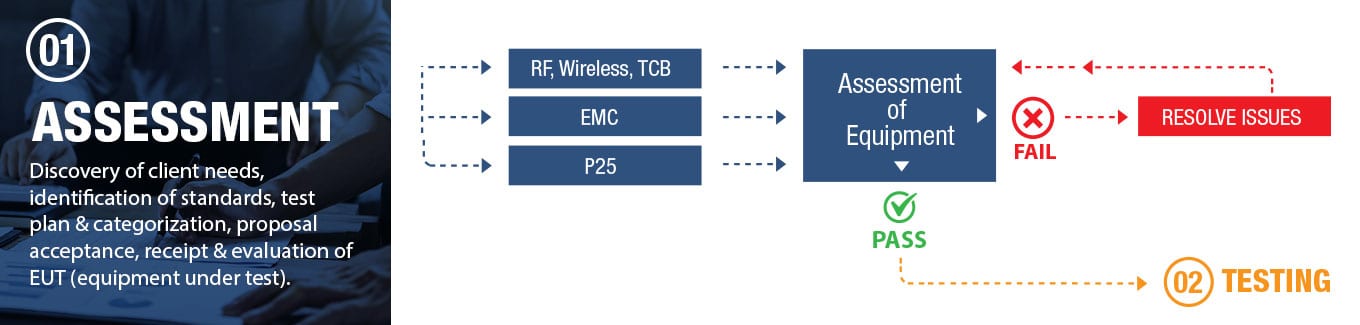
The assessment phase begins with a thorough discovery of your product’s specifications, features, and target markets. Our engineers work closely with you to understand your Bluetooth speaker’s technical details, including:
- Bluetooth version and profiles implemented
- Power specifications and charging or power supply mechanisms
- Audio output capabilities and controls
- Additional features (voice assistants, multi-room capabilities, etc.)
Based on this information, we identify all applicable standards and testing requirements for your specific device. This creates a comprehensive roadmap for testing and certification, helping you understand exactly what your product must meet for market compliance.
Step 2: TESTING - Verifying Compliance of Bluetooth Devices
FCC Testing Requirements for Bluetooth Technology
Common testing failures for Bluetooth speakers often relate to excessive power output, out-of-band emissions, or insufficient shielding of amplifier components. Portable and outdoor speakers face additional challenges related to battery safety and weatherproofing elements that may affect RF performance. Our engineering team can identify these issues early and recommend design modifications to ensure successful certification.
CE Testing for Bluetooth Speakers
CE testing for Bluetooth speakers encompasses several different evaluations to ensure compliance with European directives. Under the Radio Equipment Directive (RED), your device will undergo:
- Radio frequency performance testing (EN 300 328)
- Electromagnetic compatibility testing for both immunity and emissions
- Radio spectrum efficient use verification
Additionally, safety testing evaluates electrical risks, battery safety (for portable models), and power supply compliance to protect users. For larger speakers and sound systems, specific acoustic output testing may also be required. This comprehensive approach ensures your Bluetooth speakers meet all health and safety requirements for European consumers.
The Testing Process at an Accredited Lab
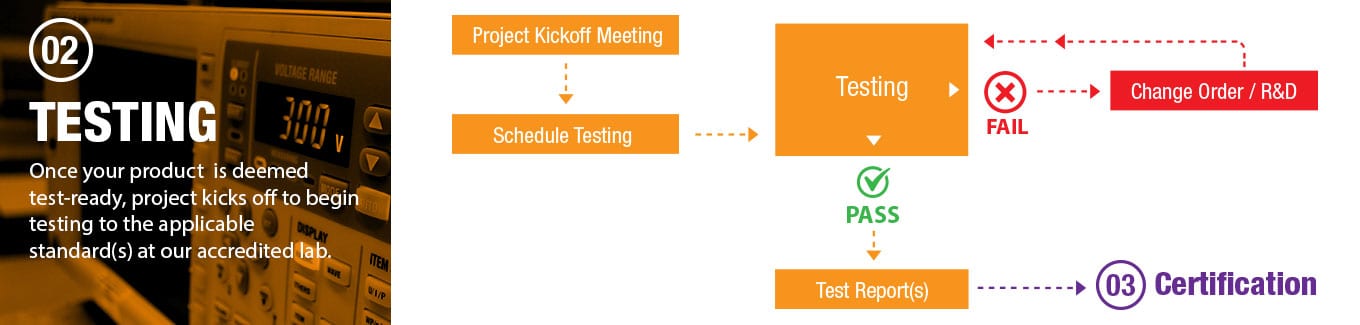
Once your Bluetooth devices are deemed test-ready, the process begins with a project kickoff meeting to establish timelines, specific testing requirements, and deliverables. Our team schedules all necessary tests in our accredited facilities, equipped with specialized equipment for wireless device evaluation.
During testing, we’ll keep you informed of progress and immediately alert you to any compliance issues discovered. If failures occur, our engineers provide detailed guidance on required modifications, allowing you to address problems efficiently before retesting.
After successful completion of all tests, comprehensive test reports document your device’s performance and compliance with all applicable standards. These reports serve as the foundation for the certification phase and become part of your product’s technical documentation.
Step 3: CERTIFICATION - Obtaining Official Documentation
FCC Certification Process for Bluetooth Devices
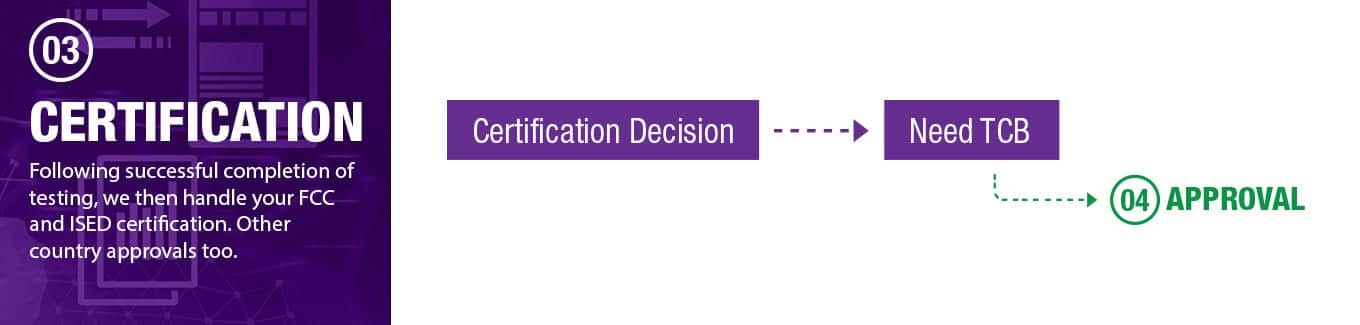
As Bluetooth speakers are classified as intentional radiators, they require formal FCC certification rather than the simpler Supplier’s Declaration of Conformity (SDoC) process. This certification must be processed through an FCC-recognized Telecommunications Certification Body (TCB).
The certification submission includes:
- Complete test reports from an accredited laboratory
- Technical specifications and operational description
- Internal and external photographs of your device
- User manual and installation instructions
- Block diagrams and schematics
Upon successful review, your device receives an FCC ID, which must be properly displayed on the product or packaging according to FCC labeling requirements. This unique identifier links your product to its certification and allows consumers or regulators to verify compliance.
CE Certification Documentation
Achieving CE certification for your Bluetooth speakers requires creating a comprehensive technical file that demonstrates compliance with all applicable directives. This file includes:
- Test reports covering RF performance, EMC, safety, and other applicable requirements
- Technical specifications and design documentation
- Risk assessment and analysis
- User instructions and warnings
- Declaration of Conformity signed by your company
The Declaration of Conformity (DoC) is a legally binding document stating that your Bluetooth speakers comply with all relevant EU directives and standards. Once completed, you can apply the CE mark to your product, indicating compliance with European requirements.
Certification Decisions and Follow-up
After submitting all required documentation, the certification body evaluates your application to determine if your Bluetooth speakers meet all regulatory requirements. This review process typically takes 1-2 weeks for FCC certification when working with an experienced TCB like Compliance Testing.
If any issues arise during the certification review, our team works with you to address them promptly, providing guidance on necessary documentation or clarifications. Once all requirements are satisfied, the certification decision moves your product to the final approval phase.
Step 4: INTERNATIONAL APPROVAL - Market Authorization
Final Approval Documentation
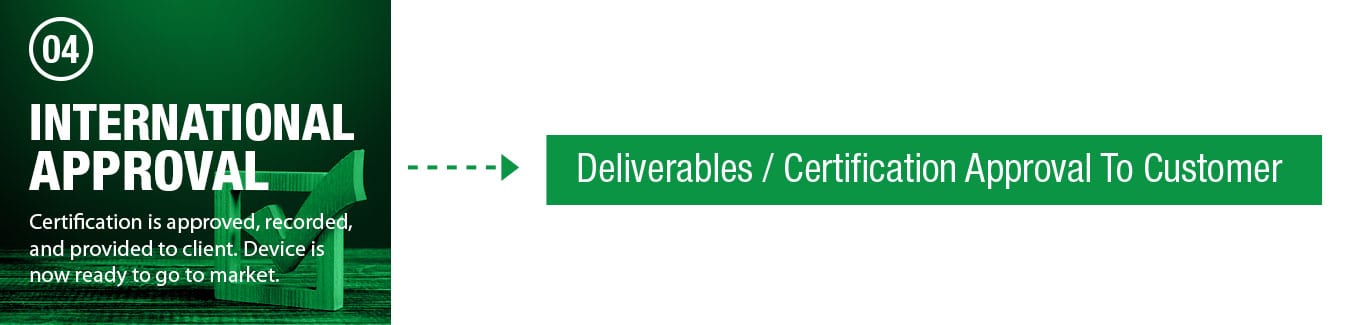
Upon successful certification, you’ll receive comprehensive deliverables that document your Bluetooth speaker’s compliance with all applicable regulations. These deliverables include:
- Official FCC Grant of Equipment Authorization
- CE Declaration of Conformity
- Test reports and certification documentation
- Guidance on labeling and marking requirements
These documents serve as your product’s “passport” to international markets, proving its compliance with regulatory requirements. We maintain secure records of all certification documentation, providing easy access if questions arise during importation or market surveillance.
Global Market Access Considerations
FCC and CE certifications provide access to the US and European markets, but they can also facilitate entry into many other global markets. Many countries recognize these certifications or have mutual recognition agreements that simplify their own approval processes.
For example, Canada (ISED) has similar requirements to FCC certification, and many Asian countries accept CE certification as part of their approval process. Our expertise in global regulations can help you leverage your existing certifications to minimize additional testing requirements for other markets.
Post-Certification Requirements
Maintaining compliance after certification involves ongoing responsibilities, including:
- Ensuring all manufactured units remain identical to the certified design
- Properly applying certification marks and labels
- Maintaining technical documentation for at least 10 years
- Reporting any significant design changes that might affect compliance
If you modify your Bluetooth speaker after certification, you may need to submit a change notification or undergo additional testing. Our team can help determine whether changes require new certification or can be addressed through simpler update procedures.

Our Testing & Certification Services
If you sell electronic device(s) online, we can help you with all major EMC certifications, including FCC (USA), CE (European Union), ISED (Canada) and others.
View our full EMC testing and certification list.
Working with Compliance Testing for Bluetooth Device Certification
Benefits of Bluetooth Testing Expertise
As an ANAB accredited laboratory (ISO 17025) and FCC-recognized Telecommunications Certification Body (TCB), Compliance Testing brings over 60 years of experience to your project. Our engineers have specialized expertise with various Bluetooth chipsets and modules commonly used in speaker systems of all sizes, from portable mini speakers to larger soundbars and multi-room audio systems.
We’ve successfully certified thousands of wireless devices, including numerous Bluetooth speakers and audio systems, giving us unparalleled insight into common compliance challenges and their solutions.
Our comprehensive testing approach covers all aspects of your Bluetooth devices in a single coordinated process, eliminating the need to work with multiple testing providers. This integrated approach typically reduces certification timelines by 30-50% compared to navigating the process independently.
Costs for FCC Certification
For detailed information about FCC certification costs for different device types, including Bluetooth speakers & audio systems, visit our comprehensive pricing page where we break down all pricing options based on device complexity and testing requirements.
Compliance Testing’s Bluetooth Device Expertise
As an ANAB accredited laboratory (ISO 17025) and FCC-recognized Telecommunications Certification Body (TCB), Compliance Testing brings over 60 years of experience to your project. Our engineers have specialized expertise with various Bluetooth chipsets and modules commonly used in audio devices.
We’ve successfully certified thousands of wireless devices, including numerous Bluetooth speakers and audio systems, giving us unparalleled insight into common compliance challenges and their solutions. Our automated testing systems and report generation capabilities further streamline the certification process.
Conclusion
Navigating FCC and CE certification for Bluetooth speakers and wireless audio systems involves a systematic four-step process: Assessment, Testing, Certification, and International Approval. Understanding these requirements early in your product development cycle helps avoid costly delays and ensures a smooth path to market.
With specialized expertise in wireless device certification and an accredited testing facility, Compliance Testing can guide your Bluetooth audio products through this complex process efficiently and effectively. Our comprehensive approach addresses all regulatory requirements in a coordinated manner, significantly reducing your time-to-market.
To discuss your Bluetooth speaker certification needs or request a detailed project quote, contact our engineering team at 866-257-6915.
Contact Us About Your Project
If you’re working on a toy or hobby electronic device and want to get it certified for sale in the U.S. or Europe, we’d love to help. Our engineers specialize in working with creators like you—from first-time inventors to experienced hardware teams—and we’ll walk you through every step of the process.
There is no fee to talk to our team. During our call, we can provide you with detailed information on the testing process for your device and answer any questions you may have about FCC, CE or other regulatory compliance marks for electronic and wireless devices.
Click here to contact us online, or call us at 866-540-5287 to talk to our FCC/CE certification specialists now.

FCC & CE Testing for Popular Electronic Products
Find device-specific certification guidance for your product with our comprehensive resources covering testing requirements, standards, and certification processes.
- Audio Equipment & Instrument Systems Compliance
- Automotive Tools Testing & Certification
- Bluetooth Headphones & Earbuds Testing and Certification
- Bluetooth Speakers and Audio Systems
- Charging Devices FCC & CE Compliance
- Computer Input Devices Testing Guide
- Computers & Tablets Compliance Testing
- Electric Mobility Devices Certification Guide
- Electronic Furniture Testing Requirements
- Home Entertainment Equipment Certification
- Printers & Printing Equipment Compliance
- Remote Controls Certification Requirements
- Smartwatches & Wearables Certification Guide
- Toys & Hobby Electronics Certification
- Wireless-Enabled Lighting Devices Testing
- Wireless Networking Devices Compliance
For detailed information about FCC certification costs for different device types visit our comprehensive pricing page where we break down all pricing options based on device complexity and testing requirements.